Operating the estate, not just its bill
Cost is downstream of how infrastructure is run. The operator that trims the bill is the same one that keeps the estate right-sized and inside its limits, because the loop that catches a cost leak catches a saturation risk too.
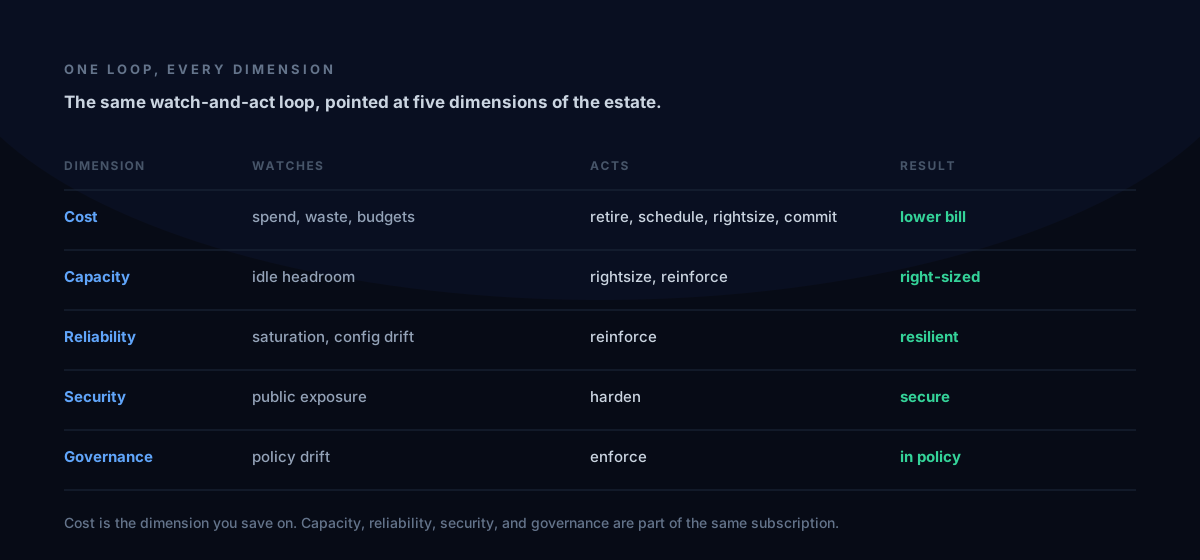
Most tools that touch cloud cost stop at the bill. They read it, chart it, and hand the work back to a person. An operator that acts on the resources sees something a bill cannot: the same estate the cost comes from. And once you are looking at the estate rather than the invoice, a pattern is hard to miss. The resource that is overspending is very often the same one that is drifting out of shape, over-provisioned, creeping toward saturation, or quietly out of policy. Cost is one symptom of how the estate is run, not a thing apart from it.
This is why the operating loop is the same regardless of what it watches. Learn the normal shape of a number, watch for it to drift past a band, then act within the guardrails you set. That loop does not care whether the number is dollars of daily spend, the share of capacity sitting idle, or the saturation of a steady workload. A cost watch and a reliability watch are the same machine pointed at different signals.
Capacity is a cost problem and a reliability problem at once
Over-provisioning has two faces. Headroom that sits idle is waste: you pay for capacity nothing uses. Headroom that disappears is the opposite failure: a workload with no room left is an incident waiting to happen. The same measurement catches both. Watching the share of provisioned capacity that sits idle surfaces the bloat; watching steady workloads as they approach their limits surfaces the risk. Rightsizing is the single action that resolves either one: trim what sits idle, give room to what is climbing.
Reliability rarely shows up on the invoice
A workload creeping toward its CPU or memory ceiling does not announce itself on the bill until it has already degraded. A resource that has drifted out of its expected configuration costs nothing extra right up until it causes an outage. These are operational signals, not financial ones, and a tool that only reads spend is blind to them. The same baseline-and-band detection that catches a cost leak catches a saturation curve or a drifting configuration, and it catches them early, while there is still a cheap action to take.
One system, because the action is one
The reason to run cost and reliability from the same operator is not tidiness. It is that the action is shared. Rightsizing a workload down when it sits idle saves money and removes bloat. Giving that same workload room as its baseline climbs prevents a saturation incident. Scheduling a non-production environment off saves its idle hours and shrinks the surface that can drift. One lever, two outcomes. Splitting cost and reliability across two tools means two views of the same resource, and two chances to reach it late.
The point of operating the estate rather than reading its bill is that cost is downstream of how the estate is run. Keep it right-sized, clean, and inside its limits, and a lower, more predictable bill follows on its own. That is the line between a tool that reports and an operator that acts.
See it on your own estate
We connect to your accounts, map every resource inside them, and show you what PYXIS3 would operate and the savings it would realize in the first month, before you pay anything.
Book a demo